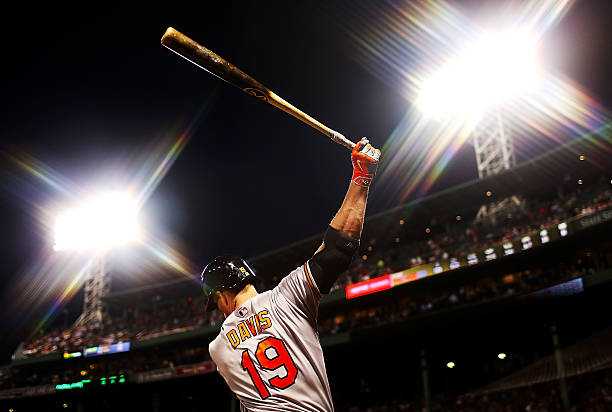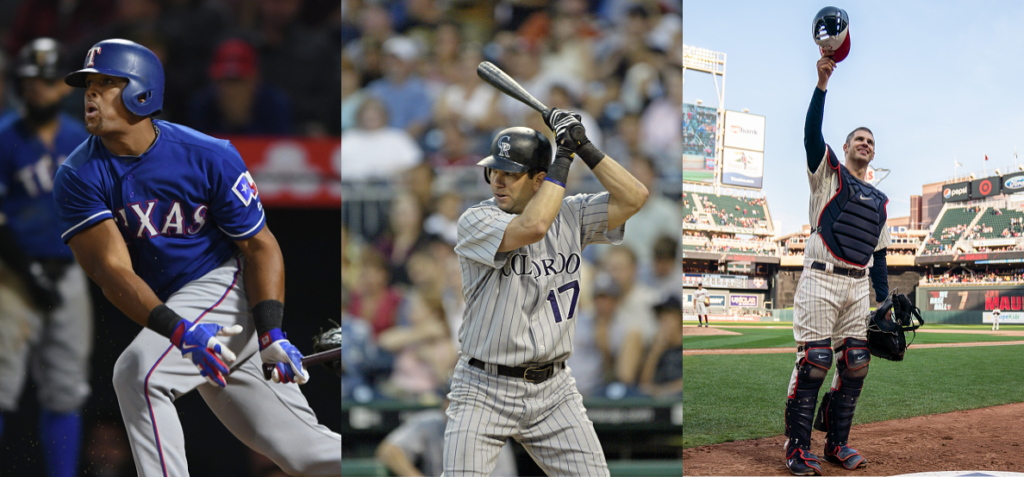
My 2026 Baseball Hall of Fame “Ballot” — Carlos Beltran and three others
It’s that time again! I do not have a Hall of Fame vote yet and will not until the middle of next decade at the absolute soonest. But I still go through the exercise every year. Given how much I love baseball and its history, voting for the Hall of Fame will be a high honor, one that I will take seriously. Therefore, I am publishing the players I would have selected and my reasons for doing so. I will continue this practice every season.
This season has the weakest first-year ballot entries since 1987. That first-year-on-the-ballot class included five players. Of the five, only Bobby Bonds surpassed the 5% threshold required to stay on the ballot. Bonds stayed on the writers’ ballot for 11 years, peaking at 10.6% in 1993 before finally falling off after netting 4.2% of the votes cast in 1997. Since 75% is the percentage required for induction, Bonds never even came remotely close to making it. In fact, his highest percentage could have been multiplied by seven, and he still would have been short. As for the rest of the first-timers from that class, only two others even received votes: six for reliever Mike Marshall and three for Sal Bando, giving them 1.5% and 0.7%, respectively. Two — Steve Stone and Jerry Grote — did not receive any votes.
Fast-forward to the present day. Of the 12 first-year candidates, it is likely that only Cole Hamels will even stay on the ballot for 2027. Given that he has 163 wins and did not reach 2600 strikeouts, his chances of ever reaching 75% are so remote as to barely warrant mention.
My “Ballot”
After careful consideration, my “ballot” has four names.
Carlos Beltran
Dustin Pedroia
Francisco Rodriguez
Jimmy Rollins
My Hall of Fame Standards
1) Certain career milestones are automatic.
Hitters: 500 home runs, 3000 hits, or .300/.400/.500
Starting Pitchers: 300 wins, 3000 K, or 50 shutouts
2) If a hitter did not reach these milestones but came close, then I put him in if he was also an elite defender for several years.
3) Catcher, shortstop, second base, and center field are “defense first” positions, so defensive prowess is weighed more heavily than it is for other positions.
4) For relievers, if his appearance was all but a guaranteed “game over” for many years, he’s in.
5) I also look at his overall impact on baseball. For example, if a pitcher or hitter terrified me as an opposing fan for a sustained period of time (several years), he’s in.
6) I eliminated anyone who, after the steroid testing rules were collectively bargained with the MLBPA, failed a PED test.
7) If I still have more than 10, I remove anyone who either a) is such a sure bet that me not voting for him will clearly not keep him from reaching 75% or b) probably won’t make it but is going to come back next year because he’ll still be eligible and is assured of getting enough votes to stay on the ballot.
Building the List
The other two starting pitchers from the first-year candidates — Gio Gonzalez and Rick Porcello — did not come anywhere close to the “automatic” career stat benchmarks. Nor were they historically significant enough to deserve a vote. Of the position players, only Edwin Encarnacion even reached 400 homers, smacking 424. Only one — Nick Markakis — reached 2000 hits, cracking 2388. Neither was historically significant enough to deserve a vote. Alex Gordon, Shin-Soo Choo, Howie Kendrick, Hunter Pence, Matt Kemp, and Daniel Murphy, while having nice careers, were not historically significant enough to deserve votes, either. Ryan Braun was the 2007 NL Rookie of the Year, 2011 NL MVP, a six-time All-Star, and a five-time Silver Slugger. But he served a 65-game suspension in 2013 for a failed 2011 PED test. Braun later admitted to using. Even without the failed test, he would not deserve a vote, but this cements it.
Of the returnees, Alex Rodriguez had 696 home runs and 3,115 hits. He also had 2,086 RBI, one of five (Henry Aaron, Albert Pujols, Babe Ruth, Cap Anson) to enter the 2,000 RBI Club. Manny Ramirez had 555 home runs and was also in the .300/.400/.500 Club. This completes Step One.
The More Complicated Ones
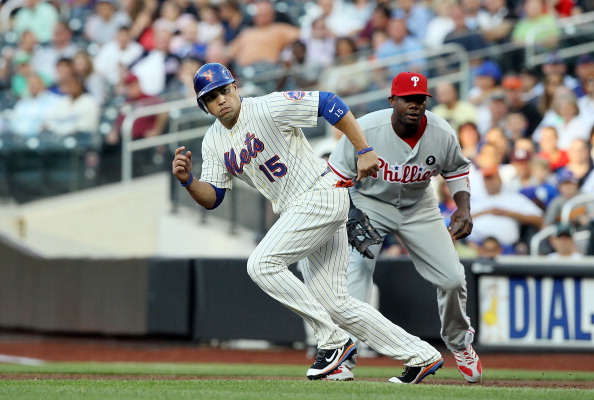
Carlos Beltran was 275 hits shy of 3,000 and 65 home runs shy of 500. His career slash line was .279/.350/.486, so he did not make any of the automatic milestones. This is offset by his 300 stolen bases, making him one of five players to have 2500+ hits, 400+ home runs, and 300+ stolen bases. The others are Rodriguez, Willie Mays, Barry Bonds, and Andre Dawson, so this is an exclusive group. Furthermore, Beltran was an elite defender, ranking seventh all time in Total Zone Runs (Rtot) by a center fielder with 104. His role in the sign stealing scandal does not change that, nor does it disqualify him from my “ballot.” People have stolen signs and relayed the info since the beginning. The Astros simply got caught. And there is no way they were the only team doing it at the time.
Jimmy Rollins played a defense-first position — shortstop — winning four Gold Gloves over the course of his career. He was among the best offensive shortstops of the past 25 years. During his career, which ran from 2000 to 2016, he was second to Derek Jeter among shortstops in runs scored (1437 to 1421) and fourth overall behind Albert Pujols, Alex Rodriguez, and Jeter. In hits, Rollins was second among shortstops and fifth overall. Doubles? Sixth overall, first among shortstops. His 115 triples? Second among shortstops (Jose Reyes, 121) and third overall (Carl Crawford had 123). In stolen bases over that time, Rollins came in third, with 470. Only Reyes (488) and Crawford (470) had more.
Another Center Fielder
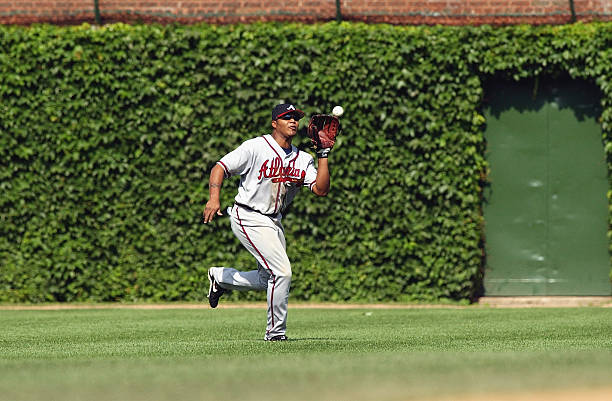
Andruw Jones also played a position that is still defense-first, although not as much as catcher or middle infield. In Rtot, he had the most ever by a center fielder (230) and fourth-most of any position behind third baseman Brooks Robinson (293) and shortstops Ozzie Smith (239) and Mark Belanger (238). Jones is also in an elite club of only five players, that being 200 or more Rtot, with Roberto Clemente (204 in right field) as the fifth member. His 12 seasons with the Atlanta Braves were impressive, slashing .263 (1683-for-6408)/.342/.497 while averaging 28 doubles, 31 home runs, and 93 RBI per season. For his entire career, he hit 434 home runs.
But he played five seasons after leaving Atlanta and did not even reach 2000 hits in his career. His slash line fell to .254/.337/.486. In two of those seasons, he batted below .200. His defense also suffered. With the Los Angeles Dodgers in 2008 and White Sox in 2010, his Rtot in center field was negative in both seasons. His totals? With the Dodgers, -8; with the White Sox, -4. His center field play had deteriorated so much that the Texas Rangers (2009) and New York Yankees (2011–12) never played him in center field during a game, not even for so much as an inning.
Falling Off a Cliff
I have advocated for Jones before, but I stopped that when creating my 2023 “ballot.” Hall of Famers do not fall off a cliff like Jones did after turning 30. His last season in Atlanta was the year he turned 30, and he slashed .222 (127-for-572)/.311/.413 with 27 doubles, 26 home runs, and 83 runs scored. This was a guy who hit 51 homers two years prior and 41 the season before. In the five years following, he slashed .210 (250-for-1191)/.316/.424 with 53 doubles, 66 home runs, 172 RBI, 354 strikeouts, 174 walks, and 159 runs scored. His wOBA and wRAA during those seasons were .325 and 3.0. That was in five years combined. Sorry, but this is not a Hall-of-Fame resume.
A Reliever Who Deserves More
Francisco “K-Rod” Rodriguez has not been mentioned much, which is a shame. His ERA-minus is 69, tied with Dennis Eckersley, who is third among Hall of Fame relievers behind Rivera (46) and Hoyt Wilhelm (68). Rodriguez came onto the scene in 2002, where he was a lights-out setup man for Troy Percival in the postseason as the then-Anaheim Angels won the World Series. As a closer, K-Rod finished fourth on the career save list behind Rivera (652), Trevor Hoffman (601), and Lee Smith (478), also having a better save percentage (85%) than Smith (82%). In addition, he holds the single season record for saves (62).
Beyond that, he put up the high save total while spending all or part of six seasons as either a middle reliever or setup man. And as a setup man, he was among the best. Rodriguez, like Wagner last year, meets the fourth criterion. As a closer, I definitely felt the game was over if he came in the game and was facing my team. And as a setup man when he was with the Angels, I often felt better about my team’s chances to come back against Percival than I did against Rodriguez. That’s not a knock on Percival, as he was also a dominant reliever, albeit not for a long enough time to be considered for the Hall. Rodriguez gets my “vote” and will until he either makes it or falls off the ballot.
Historically Significant
Dustin Pedroia was a tougher case due to a comparatively short career that did not see him reach any counting numbers. His career was shortened by a dirty slide from Manny Machado April 21, 2017. Although he played 89 more games in 2017, along with three games in 2018 and six games in 2019, he was not at all the same. Therefore, we will look at the ten full seasons he played prior to “the slide.”
Pedroia won the 2007 AL Rookie of the Year with the Boston Red Sox — the team with whom he spent his entire career — en route to a World Series championship. He had an even better season in 2008, appearing in his first All-Star Game and winning the Silver Slugger, Gold Glove, and AL MVP. Pedroia won another World Series in 2013 and was one of the faces of the Boston Red Sox during his entire career.
Pedroia was the best defensive second baseman of his era and finished fifth all-time in Rtot by second basemen (98). Between 2007 and 2016, he led all second basemen in Rtot, UZR (Fangraphs’ version of Rtot), and Defensive WAR. Offensively, he also excelled. The only second baseman who was better offensively during said time span was Robinson Cano, who likely will not make the Hall due to his 80-game PED suspension in 2018 and year-long PED suspension in 2021. Among players whose primary position was second base, and who had at least 2500 PA, Pedroia finished third in batting average (.303) behind Cano (.305) and some guy you might have heard of, Jose Altuve (.311). Pedroia was also second in hits (1666) and doubles (371) behind Cano (1890 and 404, respectively). In WAR over this time span, Pedoria had 50.6, second only to Cano (57.5).
Further Evidence for Pedroia
I learned an amazing stat about Pedroia from my friend and colleague Jayson Stark. During Pedoria’s first 11 full seasons spanning from 2007 to 2017, he had 53.3 WAR and nearly 1800 hits (1785, specifically). He is one of only four second basemen in the Expansion Era to have that many hits and that many wins above replacement. The other three? Cano, Hall of Famer Ryne Sandberg, and Hall of Famer Roberto Alomar.
I’ll use the same cross-sport argument as I did last year as my final argument for Pedroia. Retired center Eric Lindros rightfully made the Hockey Hall of Fame in 2016. He did so despite only playing in roughly 75% of the games his teams played during his injury-plagued 13-year career (mostly concussions). That is because he was consistently one of the top players in the league when he was in the lineup.
Granted, the thresholds are different between the two Halls. It is more difficult to make the Baseball Hall of Fame than it is to make the Halls of Fame for any of the other major sports in North America due to the high vote percentage required. However, the overlying principle is the same in the cases of both Lindros and Pedroia. Injuries suffered from brutal hits by Scott Stevens and Darius Kasparaitis, among others, did not keep Lindros out of the Hockey Hall of Fame. By the same token, an injury from a cheap shot by Manny Machado should not keep Pedroia out of the Baseball Hall of Fame.
Trimming the List
That makes six. The sixth criterion — failing a PED test after the policies were codified by Major League Baseball and the Players Association — eliminates Alex Rodriguez and Manny Ramirez. The reason I established this policy is that the league, by its practices, showed that it didn’t care about PEDs until then. They looked the other way. What you permit, you promote. What is especially damning to the league is that seven managers from this era are in the Hall, as are two general managers and the very commissioner who looked the other way. The managers and general managers benefited from players who used. To include them but not the players is unfair.
Looking Ahead
As mentioned earlier, candidates must appear on at least 75% of the ballots to gain induction. Ballots go to members of the Baseball Writers Association of America (BBWAA) who have been in the organization for at least 10 consecutive years. We will find out which players make it, if any, on Tuesday, January 20. MLB Network will air the announcement live beginning at 6 pm Eastern.
More Hall of Fame Articles
More MLB Articles
Main Photo:
- Category
-
Hall of Fame