The Big Four Guide to World Cup Teams
(Author’s Note: For those new to or unfamiliar with soccer, “friendly” is soccer’s word for “exhibition game.” What defines a “competitive match” can vary depending on who is speaking, though there are universals, like the World Cup or a continental championship. For purposes of this article, a “competitive match” is the World Cup and its qualifiers, any continental championship and its qualifiers, the defunct FIFA Confederations Cup, and any continent’s Nations League. One more thing…since I’m American, I call it “soccer.” Spare me the “it’s called football” snobbery and nonsense. Who cares what I call it. Several places call it “soccer.” The Italians call it “calcio.” The English even invented the term and used it into the 1970s. I also say “overtime” instead of “extra time.” Point is, I love the same beautiful game you do, and that’s what’s important. Now for the article…)
The World Cup is the most dramatic tournament in sports — a month where history, heartbreak, chaos, and catharsis collide. Every nation arrives with decades of baggage, identity, and expectation. Those who follow American sports already know these patterns. They’ve seen them mostly in baseball but also in basketball, football, and hockey. Several World Cup teams have Big Four counterparts with histories mirroring their emotional arcs and championship resumes. Some are dynasties. Some are heartbreak machines. Some are operatic. Some are cursed. And some are simply exhausting.
With the United States co-hosting the 2026 edition, and with its national team’s current run, there are certainly fans watching who are unfamiliar with the teams involved. This guide will put the World Cup teams in perspective with fitting parallels. Most of the parallels come from baseball, but there were some that mapped better to teams in the other three major North American leagues.
Past Champion World Cup Teams
Brazil
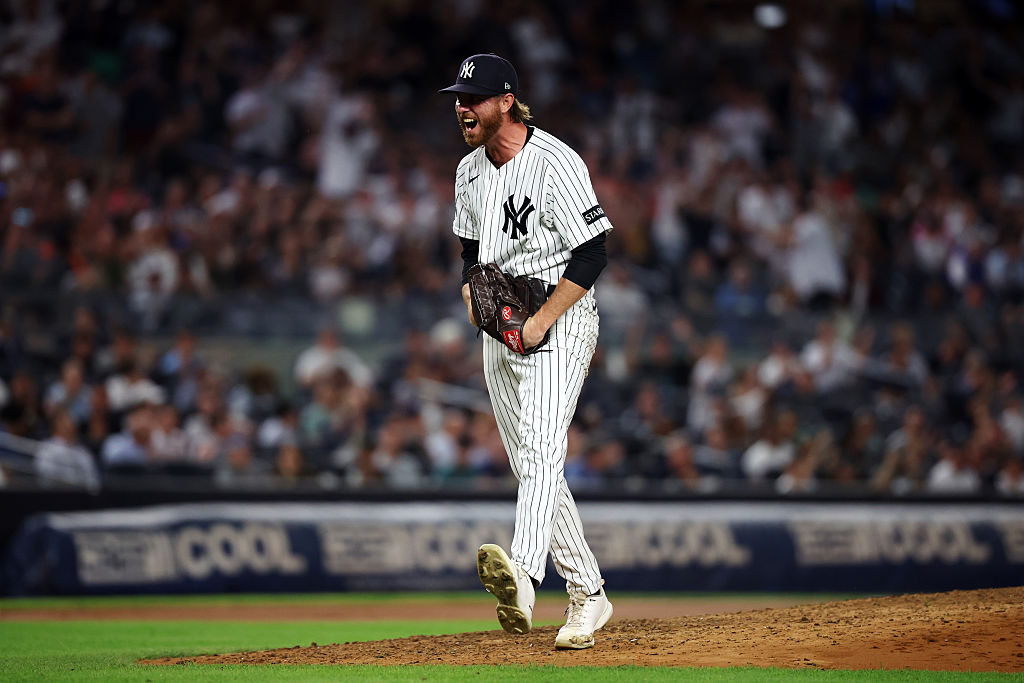
Brazil matches most closely with the New York Yankees. Both teams have the most championships — Brazil with five World Cups and the Yankees with 27 World Series titles. They both have some of the most famous players in the history of their respective sports. Brazil has Pelé, Garrincha, Ronaldo, Rivaldo, Ronaldinho, Taffarel, Dunga, Roberto Carlos, and Carlos Alberto, among others. The Yankees have Babe Ruth, Lou Gehrig, Joe DiMaggio, Whitey Ford, Yogi Berra, Mickey Mantle, and Derek Jeter, among others. Their last titles also came quite a while ago: the Yankees in 2009 and Brazil in 2002. One major difference between the two is the behavior of their fan bases. Brazil’s fans have a far more positive reputation than Yankee fans.
Interesting note about Brazil: I’m writing this Sunday morning, hours before Brazil’s Round of 16 game against Norway. Despite Brazil’s dominance through the history of international play, they have never beaten Norway. Ever. Not in a competitive game or a friendly. Norway has two wins, and the teams have tied twice. But Brazil has never won.
Germany/West Germany
Germany’s best match is the St. Louis Cardinals. Both have had tremendous success over several decades. The Cardinals have 11 championships spanning from the mid‑1920s through 2011. Germany has won four World Cups — 1954, 1974, 1990, and 2014 — both as Germany and West Germany.
Germany is consistently good. The only two World Cups they missed out of the 23 held were 1930, when they did not enter, and 1950, when they were banned. With their elimination in this year’s tournament, the 2020s are the first decade in World Cup history in which Germany or West Germany failed to finish in the top three. (There were three World Cups in the 1930s but none in the 1940s. You know…World War II.)
Germany or West Germany has reached at least the semifinals in 13 of the 21 tournaments they have participated in, including making the Final three straight times between 1982 and 1990. They also made the semifinals in four consecutive tournaments from 2002 through 2014.
Inevitability
Another parallel between Germany and the Cardinals is the way both teams carry an aura of inevitability. When either one enters a tournament or a season, fans and opponents assume they will be there at the end. Even in years when the roster looks weaker or the form is uneven, there is a widespread expectation that they will stabilize and make a deep run.
For Germany, that expectation comes from decades of tactical discipline, mental toughness, and a reputation for thriving under pressure. For the Cardinals, it comes from organizational stability, strong player development, and a long history of finding contributors who outperform projections. Both teams have a knack for turning “good but not dominant” squads into long postseason runs.
And when they fall short, the reaction is the same in both sports: confusion. Germany bowing out early feels as strange as the Cardinals finishing last in the NL Central. It doesn’t compute. It feels like a break in the natural order. Fans don’t simply get disappointed — they get bewildered. These are teams whose failures feel like violations of expectation.
That’s the core of the comparison: Germany and the Cardinals aren’t defined only by success. They are defined by reliability. Their reputations are built on consistency across eras, not on isolated peaks. When they stumble, the stumble becomes a story in itself.
France
France’s best match is the Kansas City Royals. The Royals have two World Series titles and two other World Series losses. France has two World Cups and two other losses in the Final. When these teams are good, they are consistently elite. See the Royals’ glory years in the late 1970s into the 1980s and again in the mid‑2010s. With France, when they are good, they are a force — such as their semifinal runs in 1982 and 1986, their two Finals in three tournaments from 1998–2006, their 2018 championship, and their penalty‑kick loss in the 2022 Final.
The Royals’ lean years saw them finish among the worst teams in the American League. France’s lean years were among the worst in World Cup history — namely the 2002 disaster and the 2010 player uprising against failed head coach Raymond Domenech. The latter resulted in French players being summoned before the French government for testimony, and some players were banned.
Uruguay
Two‑time champion Uruguay’s best match is the New York Mets. This comes despite the Mets playing in a city — not metro area, city — with over twice as many people as Uruguay. Uruguay won in 1930 and again in a massive upset in 1950. Their 1930 team was an absolute juggernaut, though they required a comeback in the Final to win. The Mets have two World Series titles — their first in 1969 in a massive upset, and their second in 1986 when they were an absolute juggernaut. And like Uruguay’s 1930 team, the 1986 Mets required a comeback — a seemingly impossible one, for that matter — to win the World Series.
Both teams’ glory years are well behind them. They also share an emotional volatility — unforgettable highs, baffling lows, and long stretches of unpredictability that make their fanbases equal parts loyal and exhausted. And this year is no exception for either team.
England
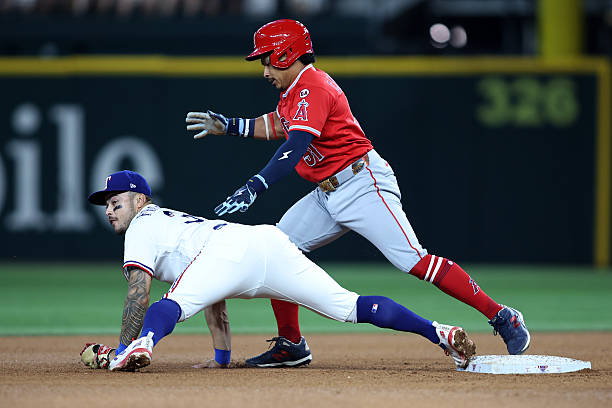
England consistently has some of the most talented teams in the world, at least statistically, but they consistently come up short. The one time they made the Final, they won — in 1966, when they hosted. Consequently, their best match is the Los Angeles/California/Anaheim Angels.
Though the Angels are currently in lean times, from the 1970s through the 2010s they were known for having tons of talent and constantly coming up short. However, the one time the Angels appeared in the World Series, they won — taking all seven games. England, when it made the Final, needed overtime to beat West Germany.
England has made two other World Cup semifinals, both grueling, stomach‑punch losses. The Angels also had ALCS losses that were grueling and stomach‑punch level (1982, 1986, 2005). Over and over, the Angels had talented teams that bowed out early or failed to make the postseason. England has the same story. Their fabled “Golden Generation” from the late 1990s through 2010 never made it past the quarterfinals in the World Cup. For that matter, they didn’t do so in the Euro (the European Championships) either, even though we aren’t including the Euro in these parallels.
A major difference is the fanbase. Angels fans lack confidence, so they are not a good match for England’s fans. England fans tend to be confident to the level of adorable delusion — adorable at first, but irritating after a while because their championship résumé is so thin. Basically, they are the international‑soccer version of Atlanta Braves fans.
Spain
If we were counting the Euro, Spain’s match would be different, since they have won four of those. But we are only looking at World Cups. Consequently, Spain’s best match is the Washington Nationals.
The single time Spain made the World Cup semifinals — there were no semifinals in 1950, when they finished fourth — they won the whole thing. The single time the Nationals made the NLCS, they won the World Series. Spain’s 2010 run and the Nationals’ 2019 run are both legendary. Even expanding to the Nationals’ time as the Montréal Expos, it still works, because the Expos lost the 1981 NLCS the lone time they made the postseason, akin to Spain’s 1950 run.
However, both have fallen well short of expectations many times. How many times did the Nationals win the NL East only to bow out early in the Division Series? Spain — consistently loaded with talent and supported by one of the best domestic leagues in the world — has only made it past the quarterfinals once. There were years where they bowed out in the group stage in head‑scratching fashion. Baseball fans, especially those who follow or support the Nationals, will recognize this pattern immediately.
World Cup Teams with Painful Baggage
The Netherlands
These next three are painful. The first is the most successful non‑champion in World Cup history — the Netherlands. Their best match does not come from baseball. It comes from the National Basketball Association: the Phoenix Suns.
This match might be the closest one in the entire article — and not simply because both teams use orange as a main color. The Netherlands have made the Final three times and lost all three. The Suns have made the NBA Finals three times and lost all three. They each had eras where they had a beautiful, joyful style of play: “Total Football” for the Netherlands and the “Run N Gun” and “Seven Seconds or Less” eras for the Suns.
Each had juggernauts as their foil through the years — Germany/West Germany, Argentina, and Spain for the Netherlands; the Lakers, Rockets, Spurs, Celtics, and Bulls for the Suns. Both teams have had iconic players who never got the trophy. Netherlands has Johan Cruyff, Johan Neeskens, Dennis Bergkamp, Arjen Robben, Ruud van Nistelrooy, Robin van Persie, and Edwin van der Sar, among others. The Suns have Steve Nash, Charles Barkley, Kevin Johnson, Tom Chambers, Connie Hawkins, Dan Majerle, and Devin Booker.
Gut-wrenching Losses
Both teams have had spectacularly painful losses in the playoffs or knockout rounds. The Suns have the triple-overtime Finals heartbreak in 1976. They have the John Paxson shot in 1993. There was the Barkley Game Seven ejection in 1994 and the Mario Elie “Kiss of Death” in 1995. Plus, there was the Joe Johnson injury in 2006 and Robert Horry hip check in 2007. Additionally, there was the Kobe Bryant airball-turned-Ron Artest buzzer-beater in 2010 and blown 2-0 Finals lead in 2021.
The Dutch have back-to-back Final losses to the host nations in 1974 (West Germany) and 1978 (Argentina and the military junta). They also have the dubious distinction of having eight knockout-phase games go to overtime and losing seven of them, either in overtime itself or in a penalty shootout. Only a shootout win over Costa Rica in the 2014 Quarterfinals kept this from being eight. Additionally, of their three Final losses, two came in overtime: 1978 and 2010. In both cases, a golden chance to score in regulation and win the game went to waste.
A Star-crossed Turn
They have lost in penalty shootouts to Brazil in the 1998 Semifinal, Argentina in the 2014 Semifinal, and Argentina again in the 2022 Quarterfinal. But their 2026 shootout loss to Morocco in the Round of 32 might have been the most painful of all.
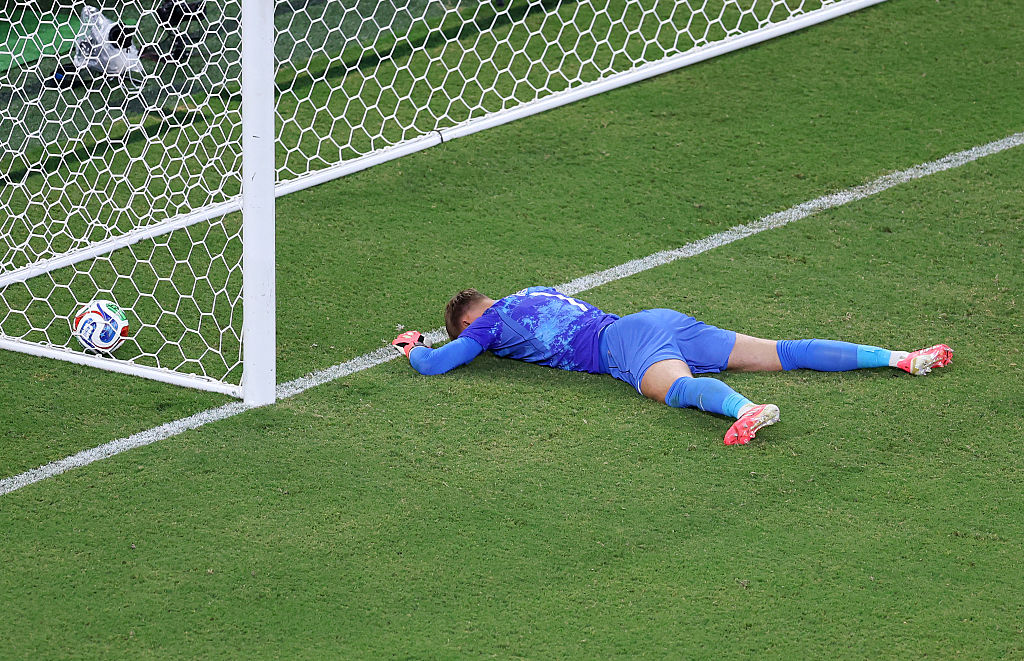
For one, Morocco sent the game to overtime in the first place on a goal in second-half stoppage time. Secondly, during the penalty shootout, Dutch goalie Bart Verbruggen saved Morocco’s second kick, which would have maintained his team’s 2–1 lead. However, while the ball was still spinning and moving, meaning the shot had not yet ended, Verbruggen stood up from his dive. While standing, his leg moved backward and batted the ball toward the line, where it trickled in before he could realize what happened. We could say “only the Dutch” and probably not be far off. However, let’s be honest. If the Suns were a soccer team, that 100% would have happened to them and only them.
Japan
Next is Japan, the newest member of the painful‑losses list. They have made the knockout rounds four times, including each of the last three. And each of those three was excruciating for their fanbase. Japan held a lead in each game. In 2018, they held a 2–0 lead in the 68th minute. Six minutes later, the game was tied, 2–2. Later, in the final minute of stoppage time, Belgian goalie Thibault Courtois zipped a long throw upfield. A fierce counterattack mounted, and four passes later, the Belgians scored what turned out to be the winning goal.
In 2022, despite outplaying Croatia, they lost in a penalty shootout, 3–1. Croatian goalie Dominik Livaković saved all three of Japan’s misses, the third to ever do that in a World Cup. And in their 2026 Round of 32 loss to Brazil, they lost their 1–0 lead in the 56th minute. With barely over a minute of stoppage time remaining in the second half, they surrendered the winning goal to Gabriel Martinelli.
Japan has a parallel, but we had to get era-specific: the 1919 to 2003 Boston Red Sox. Their failures were famous, having lost Game Seven of the World Series seven times — 1946, 1967, 1975, and 1986. They also had the 1978 AL East single-game tiebreaker playoff with the Yankees and the 2003 ALCS loss to the Yankees. These games gave Bucky Dent and Aaron Boone new middle names throughout New England. Consequently, Red Sox fans from that era can sympathize with Japan fans and their current sorrow.
Scotland
Now for Scotland. Their fans are delightful, but their team is a textbook case of futility at World Cups. Their best match does not come from baseball. It comes from the NFL’s Houston Texans. The Texans have made the playoffs nine times and have never made it past the Divisional Round. Scotland has made nine World Cups and has famously never made it out of the group stage.
The Hosts
Canada
We do have matches for the three host nations, but none come from baseball. They all come from the National Hockey League.
The best match for Canada is the Seattle Kraken. Canada has only made three World Cups, so there isn’t much history to work with. The Kraken began play in 2021. They have made the playoffs once, and in that run they defeated the ailing but defending Stanley Cup champion Colorado Avalanche. Canada made the knockout phase for the first time in the current World Cup and defeated South Africa to reach the Round of 16. On Saturday, their run ended with a 3-0 defeat to 2022 semifinalist Morocco.
The United States
For the United States, the best match is the Minnesota Wild. Both the Wild and the U.S. are typically competitive, but they rarely have knockout‑round success. Prior to Wednesday’s win over Bosnia and Herzegovina, the U.S. had only won one knockout‑round game — in 2002 against Mexico. The Wild have made the conference finals once — in 2003, when they ran into Jean‑Sebastien Giguère and the Anaheim Mighty Ducks.
Mexico
Mexico is consistently good at getting out of the group stage, but they almost never win in the knockout round. They made the quarterfinals in 1970 when they hosted, but the first knockout round in 1970 was the quarterfinals.
Their only knockout‑round wins have come in 1986, when they beat Bulgaria, and Tuesday, when they defeated Ecuador. Both games were played in Azteca Stadium, where Mexico is nearly invincible in competitive games. In Azteca’s 60-year history, Mexico has a record there of 67 wins, 17 ties, and 2 losses. Yes, you read that correctly. Two competitive-match losses out of 86 games in 60 years. (2001 against Costa Rica, 2013 against Honduras, both 2-1 final scores, in case you’re wondering.)
Their 1970 run ended in the quarterfinals with a 4-1 defeat in Toluca to Italy, the eventual runners-up. In 1986, their run also ended in the quarterfinals, when they lost on penalty kicks to West Germany, also the eventual runners-up. That game was played in El Volcán in Monterrey, meaning their only knockout wins in World Cup history have come in their fortress of Azteca Stadium.
Their Big-Four Equal
Mexico’s record at Azteca Stadium is unlike anything in world sports. However, their knockout-round performance does have a Big Four playoff parallel — the Winnipeg Jets. Both Mexico and the Jets have passionate fanbases. Additionally, they both make the postseason or knockout rounds regularly, but both teams have alarmingly low success rates once they reach. We’ve already gone over Mexico’s record there. For the current rendition of the Jets, they have made the playoffs eight times. This includes making seven out of eight between 2018 and 2025. In those eight appearances, they bowed out in the first round five times. Their run ended in the second round twice and the third round — the conference finals — once, a five-game loss in 2018.
A note on Mexico: there have been claims that with Tuesday’s win over Ecuador, “the curse is over.” It most certainly is not over — it is continuing the pattern. Prior to Tuesday, Mexico had never won a World Cup knockout game that was not held in Azteca Stadium. After Tuesday, that is still true. If they beat England, that will still be true. The only way the curse will end is if they make and win the quarterfinals, because that game will be in Atlanta.
The Two Remaining World Cup Champions
Italy
Now it’s time to step on some land mines. The first is the only former champion to miss this World Cup — Italy. Their best match is the NFL’s Oakland/Los Angeles/Oakland/Las Vegas Raiders. The Raiders have won three Super Bowls; Italy has won four World Cups. Their teams are known for theatrics. Their fans are known — fairly or not — for constant complaining anytime their team loses. True, every fanbase complains, but Italy fans and Raiders fans take it to an extreme. They give the impression that every loss feels like a personal affront to them, and the have the reputation of seeming to feel the entire world is out to get them every time they lose.
Furthermore, they still argue against decisions that were correct under the rules of the time. For the Raiders, see the Immaculate Reception and the Tuck Rule. For Italy, see the 2002 Round of 16 game with South Korea and their complaints about officiating in 2010. But before looking up or revisiting the South Korea game, make sure you know the truth. Yes, there were some missed calls, most notably some elbows from both teams. But two oft-cited plays were correctly officiated.
There is a play from late in the first half where Italian defender Francesco Coco was left bleeding from the head. This is pointed to often as “evidence” of corrupt officiating. However, the reason there was no foul called on that play is basic. The contact that caused the wound came from “friendly fire” — the knee of leaping teammate Damiano Tommasi.
The Red
Another piece of “evidence” the naysayers use is the second yellow on Italian striker Francesco Totti in overtime. Totti received his first yellow midway through the first half after elbowing Kim Nam-il on top of the head while both leapt for an aerial ball. In overtime, during the 103rd minute, Totti went down in the penalty area. However, he did not get a penalty kick. Instead, he received a second yellow for diving. Since it was a second yellow, it was also a red card.
A photo of Totti going down as his shin and the shin of the South Korean defender are together quickly circulated. But the video tells a different story — Totti started to go down before there was contact. He threw himself into the leg of the defender — a slick move that a lot of referees have fallen for, but not that one. Fourteen minutes later, Ahn Jung-Hwan scored. Under rules of the time, the game immediately ended, and South Korea advanced. Ahn played for Perugia at the time, in the Italian league, on loan. Perugia’s owner did not renew Ahn’s contract, saying he wouldn’t pay the salary of someone who disgraced Italian soccer. The owner later reneged after public outcry, but it was too late to save face.
The Response
The response from the Italian team and its supporters was fierce. Cries of foul and conspiracy still echo to this day. However, they not only ignore that those plays were officiated correctly, but they miss an even bigger point. Had Italy not yielded an 89th minute goal, they would have won in regulation. The same holds true had Christian Vieri scored from five yards out on an empty net one minute later instead of shanking it. Instead of turning his foot sideways and redirecting it accurately, he tried to wind up and blast it, and the shot went high and wide.
2026
After Italy failed to qualify for the 2026 World Cup, head coach Gennaro Gattuso — a midfielder from that 2002 team — complained about Africa having 10 spots. Never mind that Italy had every chance to qualify but failed to win their group because Norway beat them twice. Nor was it important that Italy failed to defeat Bosnia in the playoff phase. Bosnia, by the way, finished third in a group that included Canada and Qatar — teams that are not heavyweights by any measure. Gattuso said Africa did not deserve 10 spots and one should have gone to Europe. Here’s a better idea, Gennaro: win your group.
By the way, nine of the ten African teams made the knockout phase.
Argentina
For Argentina, their best match is the NBA’s New York Knicks — one of the most operatic and dramatic teams in American sports. This goes beyond both teams being the most recent champions. It also goes beyond both teams having three titles. They both had their first two titles come rather close together after years of heartbreak — the Knicks in 1970 and 1973; Argentina in 1978 and 1986. (Remember — tournaments are every four years, so ’78 and ’86 were two out of three.) Afterwards, they had extended title droughts — the Knicks from 1973 to 2026 and Argentina from 1986 to 2022. And during the intervening years, each team had more than its share of moments that were mythic, emotional, combustible, and/or theatrical.
Additionally, they both have dark-arts reputations, fair or not. Argentina through the years has been known for fouls, fights, gamesmanship, diving, and tactical cynicism. The Knicks, especially in the 90s, were known for physicality, fights, intimidation, and the “New York mugging” style of play.
Through the Years
Argentina has had several players known for creativity, improvisation, flair, and artistry. These players include Mario Kempes, Daniel Passarella, Diego Maradona, Juan Riquelme, Angel Di María, and Lionel Messi. The Knicks were known for their 1970s magic, 1990s grit, and 2020s revival. Their icons have included Willis Reed, Walt “Clyde” Frazier, Bill Bradley, Patrick Ewing, John Starks, Carmelo Anthony, and Finals MVP Jalen Brunson. Argentina saw beautiful play from Maradona’s artistry, Messi’s genius, Riquelme’s elegance, and Di María’s clutch brilliance. The Knicks saw beautiful play from Frazier’s swagger, Reed’s leadership, Ewing’s dominance, and the recent play of Brunson.
Even through the success and the beauty, Argentina has endured dressing room volatility, federation chaos, coaching turnover, and media storms. They Knicks have had front-office chaos, coaching turnover, owner controversies, and the expected media pressure from playing in New York and Madison Square Garden.
Dark Arts for Argentina
Argentina won the 1978 World Cup at home under the shadow of the military junta. There was a pall over the tournament — no fault of the players — due to both the dictatorship and a suspicious 6–0 win over Peru in the Second Group Phase that got them into the Final at the expense of Brazil. Later, in 1986, Argentina defeated England in the Quarterfinals aided by Maradona’s illegal “Hand of God” that everyone on the planet except the referee and two linesmen saw. In 1990, Argentina became the first team to have a player get a red card in a Final — and they ended up having two reds, both deservedly.
Maradona was banned from international play during the 1994 World Cup due to a failed drug test. In 1998, theatrics and exaggeration drew red cards for opponents in two consecutive games. After losing a penalty shootout during the 2006 World Cup in Germany, Argentina picked a fight with the victorious Germans. This gave them another dubious accomplishment — first team to ever get a postgame red card at a World Cup.
Dark Arts for the Knicks
The Knicks have been accused of being the beneficiaries of a 1985 Draft Lottery conspiracy, one that saw them get the first overall pick. This allowed them to obtain future Hall of Famer Patrick Ewing. There are whispers of a “frozen envelope” involving the one containing their logo. It’s impossible to prove if their envelope was indeed kept much colder than the others. However, a view of the video of the draft lottery itself does show that the Knicks’ envelope — perhaps suspiciously, perhaps coincidentally — was the only one that was fired against the opposite wall of the drum instead of being dropped gently into it. As a result, their envelope was also the only one with a bent corner.
Other “dark” parts of the Knicks history include their 1990s team that was known for rough play. Additionally, they have been involved in several infamous fights and brawls.
The Emotional Experience
Both fanbases live in a constant state of several overlapping emotions. These emotions include hope, dread, belief, fatalism, and catharsis, among others. Consequently, when each team won its most recent title, their fanbases experienced similar overlapping emotions. These included relief, vindication, emotional cleansing, the end of a curse, and the restoration of identity. For a prime example of this, see the video of famed Telemundo announcer Andrés Cantor calling Argentina’s win. He and his family fled the junta in 1978, when he was 18. They immigrated to the United States, where he ultimately became a naturalized citizen. His first World Cup as a broadcaster was 1990. Therefore, he did not get to call their ’86 triumph, explaining his reaction in 2022.
Looking Ahead
The 2026 FIFA World Cup continues with two Round of 16 matches per day through July 7, with the United States playing Belgium Monday evening, July 6, at 8 pm Eastern/5 pm Pacific. After an off-day July 8, the Quarterfinals will run from July 9 through 11. There will be a game each on the 9th and 10th, followed by two games on the 11th. The Semifinals will have a game each on July 14 and 15, with the third-place game July 18 and the Final July 19. Games air in English on the Fox Sports family of networks and in Spanish on Telemundo and Peacock.